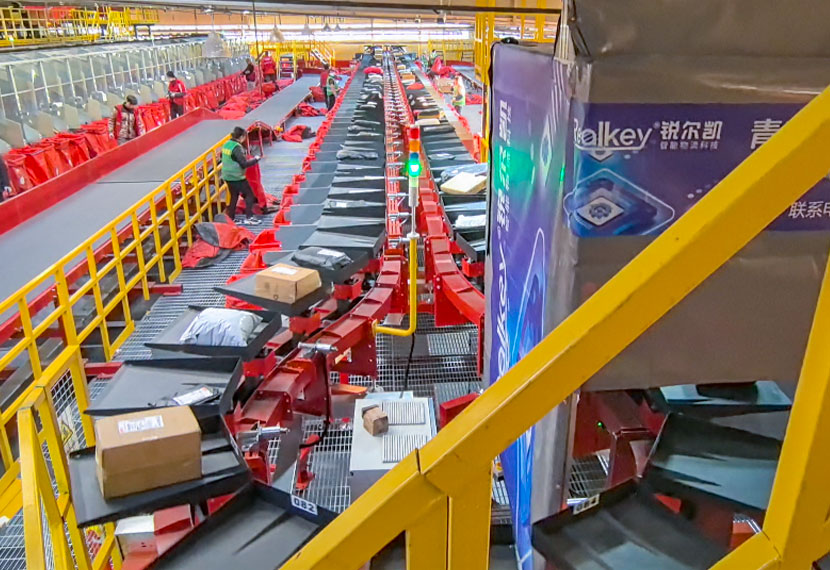
Warehouses these days handle a lot more variety—think odd-shaped cylinders, floppy polybags, multi-sided boxes, plus the heavy hitters like oversized crates, long pieces, or bulky equipment. Those kinds of parcels love to jam up standard sorters, cause drops, or just slow the whole line to a crawl. The trick is finding equipment that maintains good speed and precision, treats items gently to avoid damage, and deals with mixed loads without needing constant tweaks or extra hands.
From what we've seen in actual facilities, these three types stand out for tackling irregular and large parcels effectively.
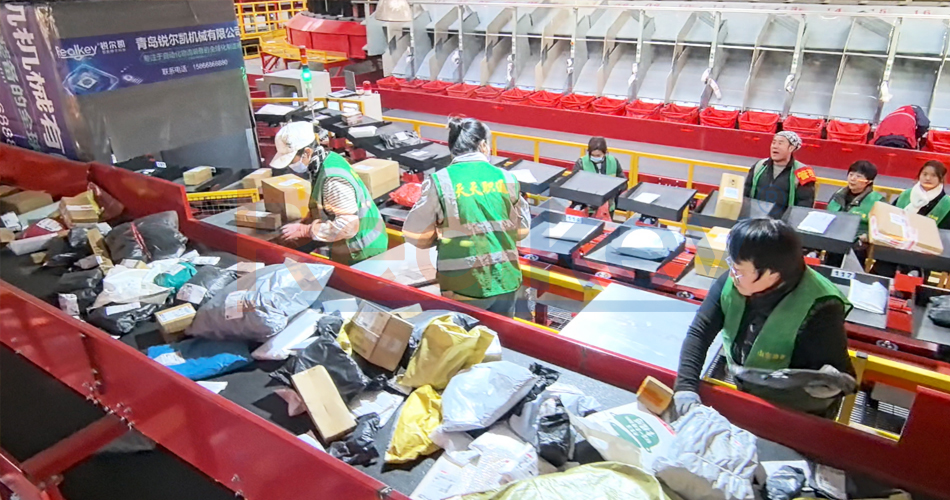
1. Tilt Tray Sorter— Solid Pick for Irregular Shapes and Careful Processing
Tilt tray sorters move parcels on dedicated trays that tilt right at the divert spot, sliding the item smoothly into its chute or lane.
What Makes It Strong:
- Really good at odd shapes—multi-sided stuff, soft pouches, tubes, fragile pieces, and even pieces that are a bit oversized (you can link trays or use doubles for extra length)
- Gentle all the way: the tray cradles everything during the ride and the drop, so impacts and drops stay minimal
- Throughput holds up well: 80–300+ items per minute is typical, depending on how you set it up
- Layout works in many ways: loops, straight runs, multiple levels, curves—no big headaches adapting to your space
Where It Falls Short:
- Super heavy loads or things that stick (like static-charged plastic) might not slide perfectly every time
- Initial setup cost runs higher, and the tilting parts need regular attention
You'll find tilt tray systems a lot in parcel networks, returns handling, and e-commerce spots where mixed or delicate irregulars are the norm.
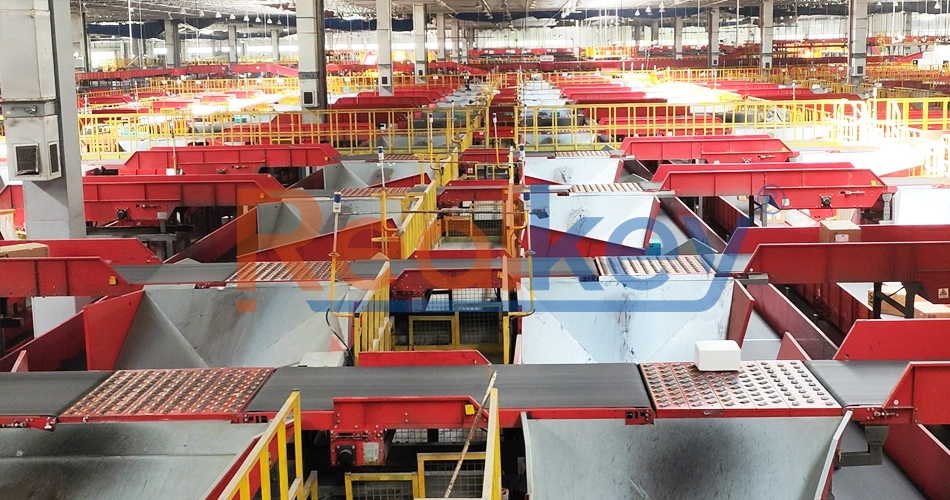
2. Swivel Wheel Sorter— Goes Strong on Heavy, Large, and Bulky Loads
Swivel wheel sorters (sometimes called omni-directional) use grids of powered wheels that spin independently to redirect parcels.
What Makes It Strong:
- Handles big and heavy really well—up to a meter long, dense boxes, machine parts, furniture bits, anything bulky
- Keeps things stable: broad wheel contact stops tipping or shifting on unbalanced or weighty items
- Tackles those "non-conveyable" headaches: cuts way down on manual sorting for awkward oversized pieces
- Often simpler mechanically and uses less energy in mid-to-high volume setups
Where It Falls Short:
- Speed sits in the medium-to-high zone—not always the choice for the absolute fastest lines
- Tiny or super-light items don't play as nicely (tray-based usually wins there)
Facilities with industrial shipments, big retail returns, or frequent heavy irregulars tend to rely on this one.
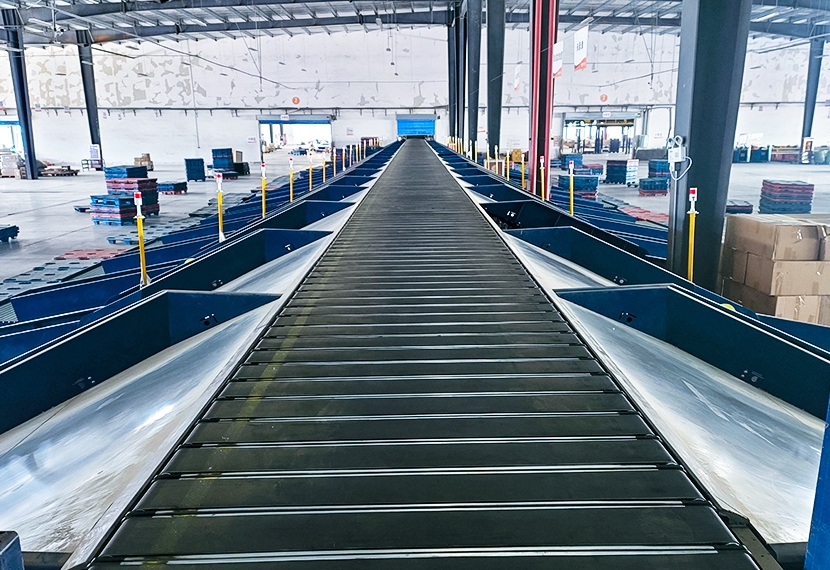
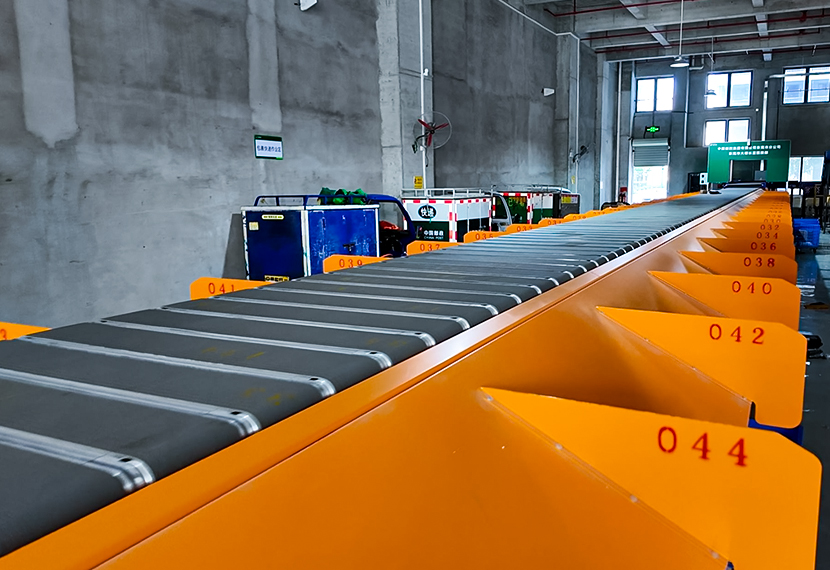
3. Narrow Belt Sorter — Handles the Full Range from Small to Large Mixed Parcels
What Makes It Strong:
- Great at mixed sizes: takes small polybags and light pieces right along with medium-large cartons, totes, and a lot of irregulars—no major interruptions
- All-round flexibility: multiple belts give stable contact across different sizes and weights, so you don't have to reconfigure constantly
- Fits in tight spots: compact design works when floor space is limited
- Runs efficiently: quieter, gentler on products (less shoving around), easier to adjust later
- Decent pace: 100+ items per minute fits many operations well
Where It Falls Short:
- Tiny items can slip through gaps; super-heavy or wildly unstable loads might need something more robust
- Edges out at the extremes of size or weight
It's a practical go-to when the daily flow includes everything from small e-comm drops to bigger boxes—good balance without over-specializing.
How These Three Stack Up
- Tilt Tray Sorter: Leads on shape variety and gentle touch for irregulars or fragiles.
- Swivel Wheel Sorter: Takes charge when size, weight, and stability are the real problems.
- Narrow Belt Sorter: Wins for versatility across small-to-large mixes, plus space and cost advantages.
- The rest (split tray, cross-belt, shoe sorters): Tend to struggle more with heavy/large/irregular extremes because of limits on capacity, grip, or drop risks.
A lot of operations mix two of them—like tilt tray for the weird shapes plus narrow belt for the everyday mix—to cover most bases.
Picking What Works for Your Setup
Before jumping in, check:
- Your typical parcel mix: biggest sizes/weights, how many irregular/large items, what causes the most trouble
- Peak volume: items per hour when it's busiest
- Space realities: what layouts can you actually fit
- Cost vs. payoff: labor savings, less damage, faster flow over time
- How it connects: ties into your WMS? Supports scanning (barcode, RFID, six-sided)?
Best approach is usually starting small—pilot on your worst parcel type or busiest section, collect real numbers, then roll out what proves itself.
Wrapping Up
Dealing with irregular shapes, soft bags, oversized boxes, heavy loads, or highly variable mixes doesn't have to be a constant headache. Tilt tray brings careful handling to odd items, swivel wheel manages heavy/large stability, and narrow belt covers the broad mix without fuss.
Realkey Machinery's Tilt Tray Sorter (TTS), Swivel Wheel Sorter (SWS), and Narrow Belt Sorter (NBS) series are built specifically for these kinds of challenges. You can check out full specs, examples from similar operations, and more at rksort.com
What's giving you the most trouble with irregular, oversized, or mixed parcels right now? Feel free to reply—we can narrow down what tends to solve similar setups best.




 Previous:
Enhancing Package Sorting Efficiency: Practical Steps for Warehouse Teams
Previous:
Enhancing Package Sorting Efficiency: Practical Steps for Warehouse Teams

 By admin