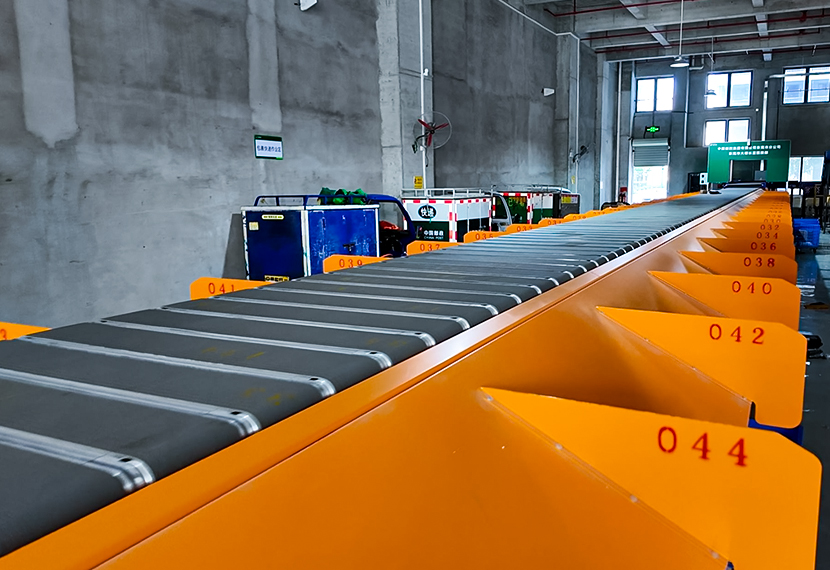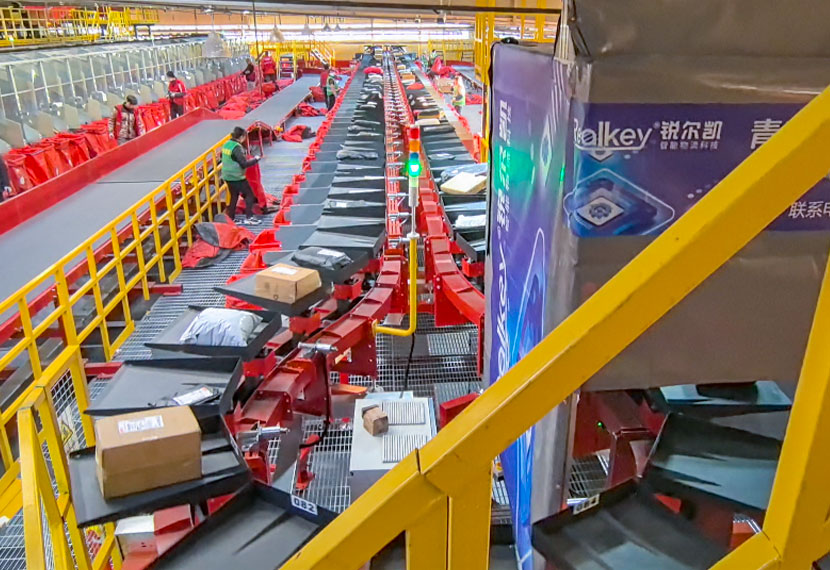
Small parcels are the lifeblood of e-commerce fulfillment these days—polybags, padded mailers, tiny boxes, single-item orders. They seem straightforward, but they create real problems: light weight means they slip or flip easily, small size leads to jams in gaps, and high volume turns tiny issues into big bottlenecks. Get the sorting wrong, and damage claims go up, throughput drops, and your team ends up manually handling what was meant to be automated.
There isn't one "perfect" method—it's about matching the tech to your actual flow: pure small/lightweight vs. mixed sizes, peak hourly volume, space limits, and budget vs. labor/damage savings. From what we've seen in real warehouses (and helped fix), these Realkey solutions consistently perform best for small parcels.
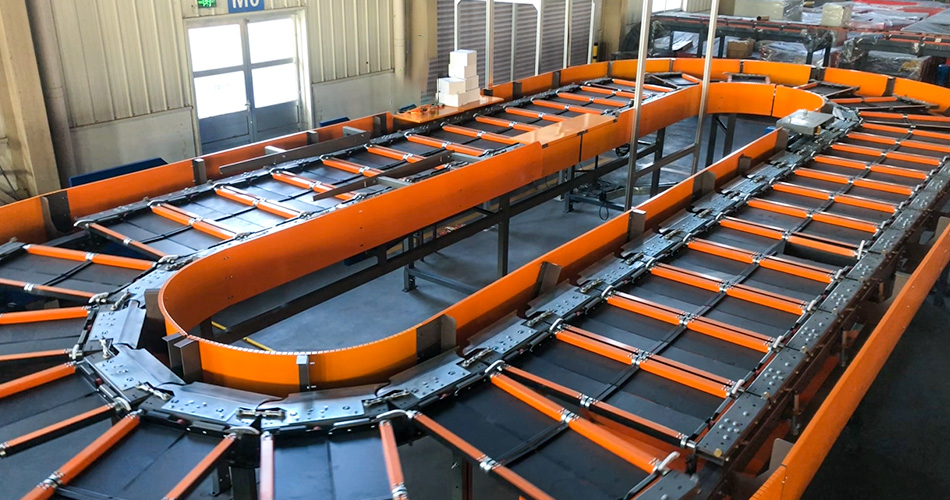
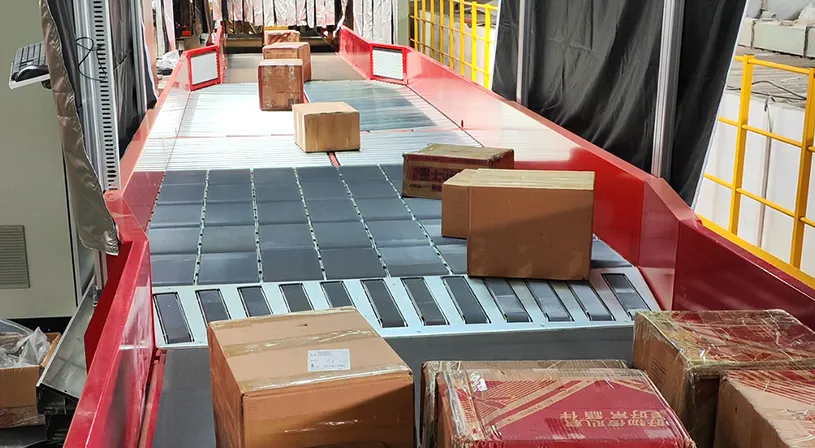
1. Split Tray Sorter – Usually the Top Choice for Pure Small, Flat, or Lightweight Parcels
Realkey's Split Tray Sorter carries parcels on trays that open from the bottom, dropping items straight down into chutes with precision.
Why it handles small parcels so well:
- Specifically built for medium and small items—directly solves the flat/lightweight sorting pain points.
- Accurate, controlled drops—polybags, envelopes, clothing mailers, soft pouches land exactly right, no floating or bouncing around.
- High-density chute layout—lots of close destinations in a small footprint, ideal for returns or high-SKU variety.
- Gentle overall—no aggressive pushes or big falls, so fragile small items stay safe.
Typical throughput: High for small-item lines (depends on induction speed).
Best fit: Operations where most flow is small/flat/lightweight (e.g., apparel, accessories, returns centers, 70%+ small parcels).
Limitations: Tray size and weight limits make it less suitable if you mix in heavier or bulkier items on the same line.
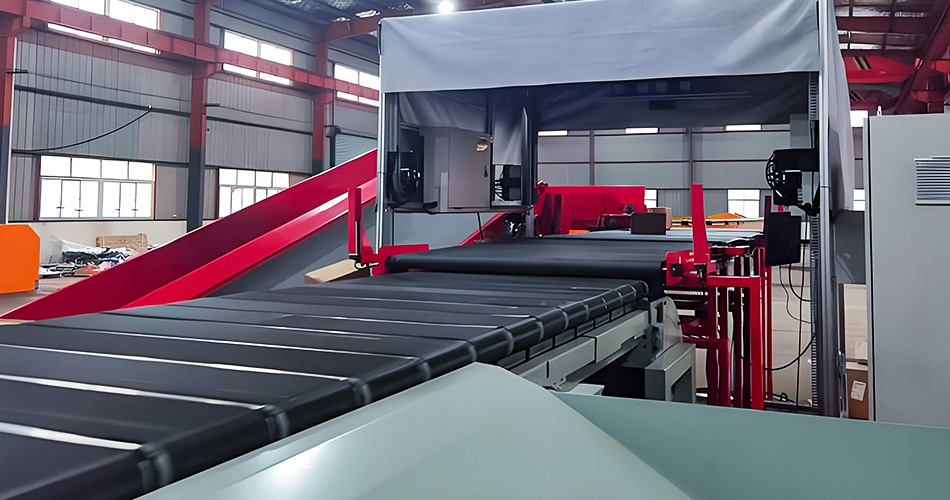
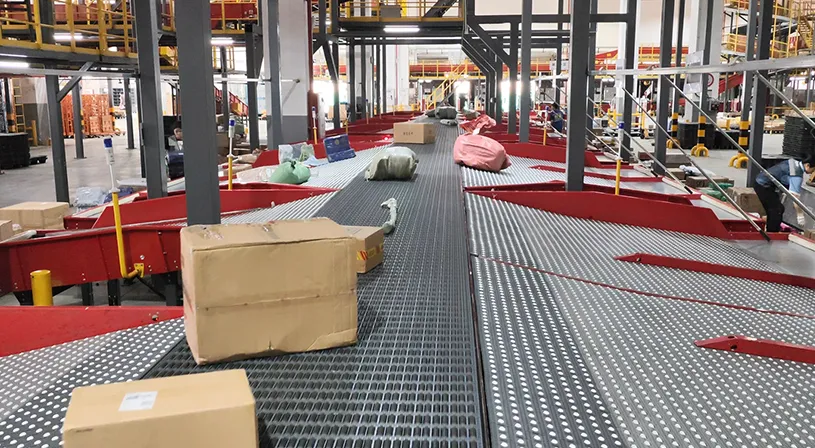
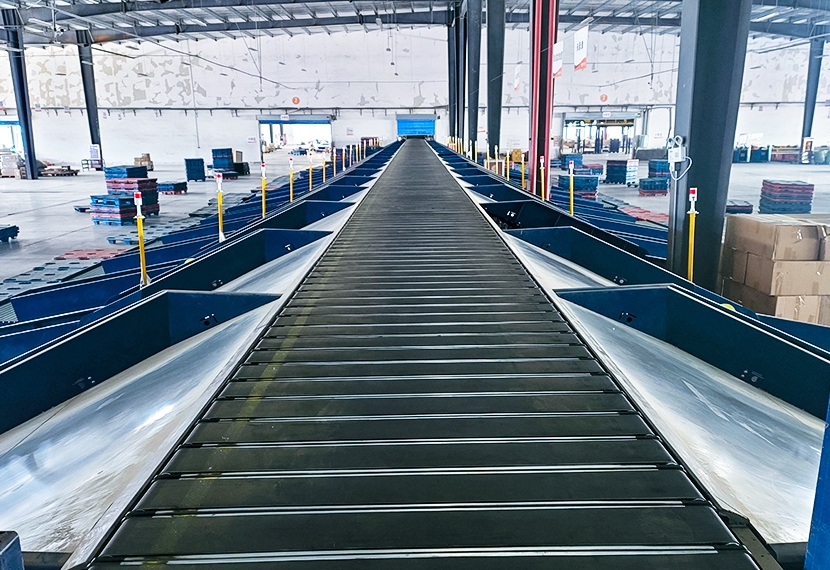
2. Narrow Belt Sorter – The Everyday Workhorse for Mixed Small + Medium Flows
Realkey's Narrow Belt Sorter runs multiple slim parallel belts with pop-up divert wheels/rollers (usually 90°angles).
Why it's great for small parcels:
- Seamlessly sorts both large and small items—no pre-arrangement or size restrictions.
- Small parcels (polybags, mailers, tiny boxes) stay stable across multiple belts—much less slipping or jamming compared to single-belt setups.
- Compact footprint—fits well in space-constrained warehouses.
- Cost-effective, quieter, and gentler on products (less jostling means lower damage).
- Flexible throughput—typically 60–150+ items per minute, scales nicely for mid-to-high volume.
Best fit: Most common e-commerce and fulfillment setups with a real mix—small parcels alongside medium boxes/totes, no extreme specialization required.
Limitations: Very tiny items need careful induction to avoid gaps; not the absolute fastest for ultra-high-volume pure-small lines.

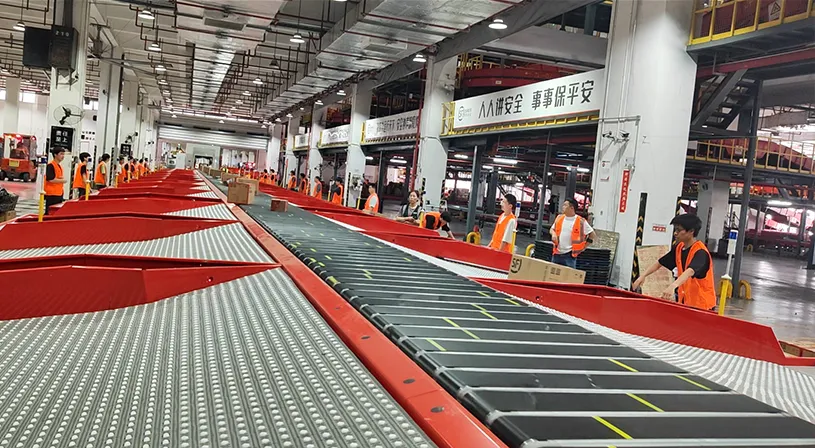
3. Cross Belt Sorter – High-Volume Speed Option for Small/Flat Parcels
Realkey's Cross Belt Sorter uses small carriers with perpendicular belts for precise, high-speed diverts.
Why it's effective for small parcels:
- Very high throughput—handles thousands of small orders per hour without breaking a sweat.
- Precise control and gentle handling—polybags, envelopes, flat packs divert cleanly without shifting or dropping.
- Flexible divert angles—supports many chutes/destinations in a compact layout.
- Works well for small-to-medium mixes in demanding environments.
Best fit: Large-scale operations (major 3PLs, big online retailers) with massive small-parcel peaks and the budget/space to support it.
Limitations: Higher cost and complexity; can be overkill for mid-volume or tighter spaces.
Quick Decision Guide
- Mostly small/flat/lightweight (apparel, returns, polybags heavy) → Split Tray Sorter: Precision and gentleness win.
- Mixed small + medium (typical e-comm variety) → Narrow Belt Sorter: Versatile, cost/space-friendly, reliable daily driver.
- Ultra-high volume pure small → Cross Belt Sorter: Speed and scalability at the top.
Many warehouses run NBS as the core for everyday mixed flow, then add STS or CBS sections for dedicated small/high-volume zones—covers most scenarios without overcomplicating things.
Picking the Right Fit
Think about:
- Peak small parcels per hour?
- Pure small/light or mixed with medium/large?
- Floor space constraints?
- Budget vs. expected labor/damage reduction?
- Heavy focus on polybags/flat items?
Start small: pilot on your current small-parcel pain point. Track throughput, accuracy, damage, and jams for 1–2 weeks—real data beats theory every time.
Realkey Machinery has these covered:
- Split Tray Sorter: Tackles medium/small flat/lightweight challenges head-on.
- Narrow Belt Sorter: Seamless small + large handling—no pre-arrangement needed.
- Cross Belt Sorter: High-speed for demanding small/flat volumes.
Full specs, induction setups, and similar-operation examples are at rksort.com.
What's your small parcel situation like—mostly polybags/mailers, or a broader mix with some medium boxes? Share a bit and we can highlight what usually works best in similar setups.




 Previous:
Best Sorting Machines for Handling Irregular and Oversized Parcels
Previous:
Best Sorting Machines for Handling Irregular and Oversized Parcels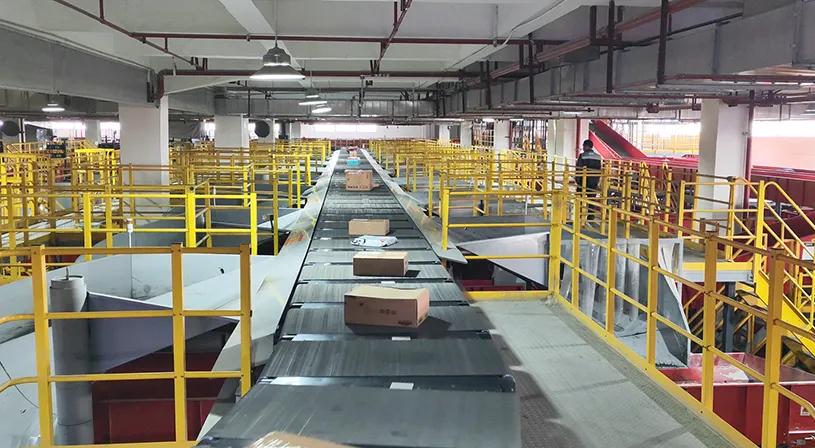

 By admin